

A chest strap makes sense when wrist-based readings lag during intervals, cycling, rowing, or strength work. The right model depends less on the logo than on what must receive the signal, whether you need offline workout data, and how you want to handle charging and cleaning.
Quick picks
We compared 16 current Amazon candidates and ranked six complete sensors above $50 from published product specifications. BestStuffGuide did not conduct physiological accuracy testing.

Polar H10 Heart Rate Monitor Chest Strap

The H10 is the most flexible choice for athletes who move among watches, apps, bike computers, and compatible gym equipment. It combines Bluetooth, ANT+, and 5 kHz transmission with onboard memory for one session, a removable sensor, a machine-washable Pro strap, and up to 400 hours of published battery life.
- Bluetooth, ANT+, and 5 kHz transmission for broad device coverage
- Onboard memory for one training session
- Up to 400 hours on a replaceable battery with a removable, washable Pro strap

Bluetooth, ANT+, and 5 kHz support give the H10 the broadest documented mix of phone, watch, bike-computer, and compatible gym-equipment connections in this group.
It transmits electrical heart-rate data and can record one session in sensor memory, making it useful when a phone or watch is not convenient during the workout.
The removable sensor, machine-washable Pro strap, 30 m water resistance, and up to 400-hour replaceable battery keep routine care manageable.

Garmin HRM 600 Premium Heart Rate Monitor
HRM 600 is the current premium choice for compatible Garmin users who want more than a live pulse stream. It adds running dynamics and standalone activity recording, uses a removable machine-washable strap, carries a 5 ATM rating, and runs for up to two months between charges.
- Real-time heart rate and HRV plus running dynamics
- Standalone activity recording for compatible Garmin workflows
- Rechargeable battery rated up to two months and a removable washable strap
ANT+ and Bluetooth cover common training devices and apps, while the strongest data integration is reserved for compatible Garmin products.
Running dynamics and standalone activity recording give HRM 600 the deepest documented training feature set in the final six.
A removable washable strap and 5 ATM rating are practical, though the rechargeable design adds a charge cycle that coin-cell models avoid.
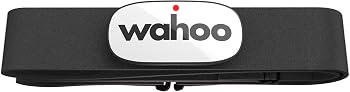
Wahoo TRACKR Rechargeable Heart Rate Monitor
TRACKR is the cleanest choice for buyers who prefer recharging to opening a coin-cell compartment. It supports Bluetooth and ANT+, weighs 39 g with the strap, carries an IPX7 rating, and is rated for more than 100 active hours per charge. It is primarily a live heart-rate transmitter rather than an offline workout recorder.
- Bluetooth and ANT+ for common watches, apps, and training hardware
- Rechargeable battery rated for more than 100 active hours
- 39 g total weight, IPX7 rating, and replaceable hand-wash strap
Bluetooth and ANT+ support broad standard-device use, with Wahoo documenting multiple Bluetooth connections for mixed training setups.
TRACKR covers dependable live ECG heart-rate transmission but does not document the standalone recording and running-dynamics depth of the premium Garmin straps.
The low weight, rechargeable battery, more than 100 active hours, IPX7 rating, and replaceable strap make routine ownership straightforward for buyers who prefer USB charging.

Garmin HRM-Pro Plus Heart Rate Monitor
HRM-Pro Plus remains feature-rich for compatible Garmin users, with stored activity data, running dynamics, and pace and distance support in addition to Bluetooth and ANT+. It uses a long-life replaceable battery, but its older integrated sensor-and-strap construction makes cleaning and eventual strap wear less convenient than the removable designs above it.
- Stored activity data plus live heart rate through Bluetooth and ANT+
- Running dynamics with compatible Garmin devices
- Pace and distance support for indoor and outdoor running
Bluetooth and ANT+ provide broad live-data links, with the most complete experience tied to compatible Garmin devices.
Stored activity data, running dynamics, and pace and distance support keep HRM-Pro Plus competitive for advanced Garmin training.
The up-to-one-year battery is convenient, but the integrated sensor-and-strap design is less serviceable and wash-friendly than removable modules.

Garmin HRM 200 Heart Rate Monitor
HRM 200 suits athletes who want current Garmin hardware for live heart-rate and HRV transmission without paying for standalone recording or running dynamics. It adds secure transmission with compatible Garmin devices, up to one year of battery life, size options, and a removable machine-washable strap.
- Live heart rate and HRV through Bluetooth and ANT+
- Secure transmission support with compatible Garmin devices
- Up to one year of battery life and a removable machine-washable strap
Bluetooth and ANT+ cover the normal training ecosystem, and secure transmission adds a useful compatible-Garmin advantage.
It handles live heart rate and HRV well but intentionally omits the standalone recording and running-dynamics features of higher Garmin models.
Up to one year of battery life, two size ranges, a removable sensor, and a machine-washable strap make it easy to live with.

Polar H9 Heart Rate Sensor Chest Strap
H9 is the lower-cost route into Polar's ECG chest-sensor ecosystem. It keeps Bluetooth, ANT+, and 5 kHz compatibility plus an up-to-400-hour replaceable battery and machine-washable Soft Strap. The main compromise is the lack of H10-style onboard session memory and the simpler strap construction.
- Bluetooth, ANT+, and 5 kHz connectivity
- Up to 400 hours on a replaceable battery
- Removable sensor with machine-washable Polar Soft Strap
Bluetooth, ANT+, and 5 kHz provide broad device and compatible gym-equipment coverage, though concurrency is less flexible than H10.
H9 is a dependable live HR and HRV transmitter but does not provide the onboard workout memory or advanced running metrics found higher in the ranking.
A removable sensor, machine-washable Soft Strap, water-resistant construction, and up to 400-hour battery support simple long-term care.
Chest-strap heart rate monitors compared
| Rank | Monitor | Connectivity | Power | Onboard and advanced features | Water rating | Strap care |
|---|---|---|---|---|---|---|
| 1 | Polar H10 | Bluetooth, ANT+, 5 kHz | Replaceable battery; up to 400 h | One-session memory; HR and HRV | 30 m | Removable sensor; machine-washable Pro strap |
| 2 | Garmin HRM 600 | Bluetooth and ANT+ | Rechargeable; up to 2 months | Running dynamics; standalone activity recording | 5 ATM | Removable sensor; machine-washable strap |
| 3 | Wahoo TRACKR | Bluetooth and ANT+ | Rechargeable; 100+ active h | Live HR; no onboard workout memory documented | IPX7 | Replaceable strap; hand wash |
| 4 | Garmin HRM-Pro Plus | Bluetooth and ANT+ | Replaceable battery; up to 1 year | Stored activity; running dynamics; pace/distance | 5 ATM | Integrated module; follow Garmin hand-wash guidance |
| 5 | Garmin HRM 200 | Bluetooth and ANT+; secure Garmin link | Replaceable battery; up to 1 year | Live HR and HRV; no standalone recording | 3 ATM | Removable sensor; machine-washable strap |
| 6 | Polar H9 | Bluetooth, ANT+, 5 kHz | Replaceable battery; up to 400 h | Live HR and HRV; no session memory | 30 m | Removable sensor; machine-washable Soft Strap |
Battery figures are manufacturer estimates. Connection count, radio use, temperature, and workout frequency can shorten real-world runtime.
How we ranked these monitors
This is a desk-research comparison. BestStuffGuide did not test physiological accuracy, connection dropouts, strap comfort, battery endurance, or water resistance. We screened 16 current Amazon candidates, then kept six complete chest sensors from three brands. Each finalist had an exact ASIN, a current observed price above $50, and enough manufacturer documentation to answer the same three questions.
Signal and compatibility account for 40% of the Editorial Rating. We checked Bluetooth, ANT+, 5 kHz gym-equipment links, secure transmission, and published simultaneous connections. Training capability makes up 35%, including HRV transmission, onboard workout memory, running dynamics, pace, and distance. Wear and upkeep make up the remaining 25%, with attention to battery design, strap removal, washing, sizing, and water rating.
The rank follows the unrounded weighted score. Features that require a compatible watch or app receive credit only within that ecosystem.
Start with the receiving device
Most current sports watches, bike computers, and training apps accept Bluetooth or ANT+, but support varies by model. Check the watch, phone app, treadmill, rowing machine, or bike computer before buying the strap. The chest sensor cannot add a protocol that the receiving device does not understand.
Bluetooth and ANT+
Bluetooth is common on phones, tablets, and newer fitness equipment. ANT+ is widely used by sports watches, cycling computers, and indoor-training hardware. A dual-protocol strap can serve both types of device, but simultaneous connection limits still matter. Someone recording on a watch while broadcasting to a bike computer and a training app may need more links than a runner who uses one watch.
5 kHz gym-equipment connections
Polar H10 and H9 add a 5 kHz connection for compatible gym equipment. That can be useful when an older treadmill or stationary bike does not support the Bluetooth or ANT+ profile used by the strap. Compatibility still has to be confirmed on the equipment itself.
Secure transmission
Garmin HRM 200 supports encrypted transmission with compatible Garmin devices. The benefit is most relevant in busy group environments where several heart-rate sensors may be active nearby. It does not replace the need to pair the exact sensor through the watch or app menu.
Live transmission or offline recording?
A basic chest strap sends heart rate and HRV data while a connected device records the workout. That is enough for most runners, cyclists, rowers, and gym users. Polar H9, Garmin HRM 200, and Wahoo TRACKR fit this simpler role.
Onboard memory helps when carrying a phone or wearing a watch is awkward. Polar H10 can store one session for later transfer through the Polar app. Garmin HRM 600 and HRM-Pro Plus go further inside compatible Garmin workflows by recording activity data and supplying advanced running information.
Running dynamics are ecosystem features
Garmin’s premium straps can provide running dynamics such as cadence, vertical motion, and ground-contact information to compatible devices. HRM-Pro Plus also supports pace and distance for indoor and outdoor running. Those features do not appear automatically in every Bluetooth app, so check the receiving Garmin model and the specific metric list before paying for the premium strap.
HRM 600 is the stronger current choice when advanced running data and standalone recording are priorities. HRM-Pro Plus remains capable, but its integrated module and strap are less convenient to service than the removable HRM 600 design.
Rechargeable or replaceable battery?
Wahoo TRACKR and Garmin HRM 600 use rechargeable batteries. TRACKR is rated for more than 100 active hours, while Garmin rates HRM 600 for up to two months. Charging avoids opening a battery cover, but a forgotten charge can stop a workout.
Polar H10 and H9 use replaceable batteries rated for up to 400 hours. Garmin rates HRM 200 and HRM-Pro Plus for up to one year. Coin-cell designs can go months between changes, though the correct replacement battery and cover seal matter. Follow the manufacturer’s instructions rather than prying the compartment open with an improvised tool.
Fit and strap care
The electrodes need consistent skin contact. Wear the strap snugly below the chest muscles, wet the electrode areas as directed, and tighten it enough to stay in place without restricting breathing. Manufacturer size ranges differ, so use the chest measurement rather than a normal shirt size.
Salt and sweat can shorten strap life and create erratic readings. Detach a removable sensor after the workout, rinse or wash the strap on the schedule in the manual, and let it air-dry. Polar H10, H9, Garmin HRM 600, and HRM 200 have removable sensors and washable straps. Wahoo specifies hand washing for TRACKR. HRM-Pro Plus has an integrated design and needs Garmin’s stated care method.
Water ratings do not mean identical use
Polar publishes a 30 m water-resistance figure for H10 and H9. Garmin lists 5 ATM for HRM 600 and HRM-Pro Plus, and 3 ATM for HRM 200. Wahoo lists IPX7 for TRACKR. Those labels come from different test standards and should not be treated as interchangeable depth promises.
Swimming compatibility also depends on signal behavior in water and how the receiving device stores the workout. A strap may tolerate immersion without sending a live Bluetooth signal through water to a watch. Check the exact swimming workflow before relying on it in a pool.
Medical and safety limits
These are consumer training sensors, not diagnostic medical devices. A clean-looking graph cannot rule out a health problem, and an odd reading may come from fit, dry electrodes, radio pairing, a weak battery, or the body itself. Stop exercise and seek qualified care for concerning symptoms regardless of what the app shows.
People with pacemakers or other implanted electronic devices should ask the device manufacturer and a clinician about compatibility. Keep coin-cell batteries away from children, install the correct type and orientation, and make sure the cover and seal return to their specified positions.
Frequently asked questions
Is a chest strap more accurate than a watch?
A chest strap measures electrical heart activity at the torso, while most watches use optical sensing at the wrist. Chest straps often respond faster during rapid intensity changes, but this article does not claim a measured accuracy margin for any finalist. Fit, skin contact, device settings, and the receiving app all affect the result.
Can one strap connect to a watch and phone at the same time?
Sometimes. It depends on the strap’s simultaneous-connection limit and the protocols used by each device. A watch on ANT+ and a phone on Bluetooth may work even when two Bluetooth connections would not. Check the manufacturer’s connection count and the receiving devices before planning a multi-screen setup.
Do I need onboard memory?
No, if a watch, bike computer, or phone is always recording nearby. Memory is useful for workouts where carrying or wearing that device is inconvenient. Polar H10 stores one session. Garmin HRM 600 and HRM-Pro Plus support stored activity data within compatible Garmin workflows.
How often should I wash the strap?
Follow the schedule in the product manual. At minimum, rinse or clean away sweat regularly and let the strap dry before storage. Remove the sensor first when the instructions allow it. Do not put an integrated sensor in a washing machine unless the manufacturer explicitly says to do so.
Can I swim with any of these straps?
Water resistance alone does not guarantee useful swim tracking. Check the strap rating, whether the sensor stores the session, whether the receiving watch supports the intended swim workflow, and the manufacturer’s pool-care instructions.
Final verdict
Polar H10 is the best all-around choice for mixed devices because it combines Bluetooth, ANT+, 5 kHz, one-session memory, and a removable long-life design. Garmin HRM 600 is the better pick for compatible Garmin users who want running dynamics and standalone recording. Wahoo TRACKR makes the most sense for buyers who prefer a light rechargeable sensor. Choose HRM-Pro Plus for its still-deep Garmin feature set, HRM 200 for simple current Garmin transmission, or Polar H9 when broad protocols matter more than onboard memory.