

The best equalizer or feedback controller depends on the job: shaping a home stereo, adjusting a live-sound system by hand, or applying automatic feedback filters. The six picks below cover those different uses. Start with the processing role and connections, then compare the controls. A feedback indicator still needs an operator to lower the right fader.
Quick picks
We compared published specifications and exact current US listings; these are research-based recommendations without hands-on BTG audio tests.
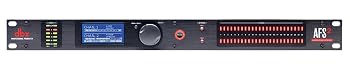
dbx AFS2 Dual-Channel Automatic Feedback Suppression Processor

Choose the AFS2 for a live-sound rack where you want automatic feedback filters and a guided setup screen. Its Fixed and Live modes handle different stages of the job; it does not replace a general tone-shaping equalizer.
- 24 configurable filters per channel
- Fixed and Live filter modes
- LCD Wizard and five user presets

A 24-filter budget per channel can be shared between Fixed and Live modes. This is feedback control, not a bank of graphic tone sliders.
Two balanced XLR/TRS line channels support stereo linking or dual mono, with +4 dBu/-10 dBV level switches.
The LCD Wizard, filter LEDs and five stored presets make configuration and monitoring unusually explicit.

dbx 231s Dual-Channel 31-Band Graphic Equalizer
The 231s suits operators who want independent, physical 31-band adjustment on two line-level channels. It offers finer manual frequency selection than a 15-band model, but has no automatic feedback-filter mode.
- 31 one-third-octave bands per channel
- Switchable ±6 dB / ±12 dB range
- Balanced XLR/TRS and output meters
Independent 31-band constant-Q channels give detailed manual shaping; feedback cuts still require an operator.
Balanced XLR/TRS connections and separate channel controls fit a stereo rack or two mono signal paths.
Sliders, output meters, a range switch and EQ bypass are direct, but there are no saved scenes or setup Wizard.

Behringer FBQ1502HD Stereo 15-Band Graphic Equalizer
Pick the FBQ1502HD for a compact live-sound EQ that points out a troublesome frequency band. Its illuminated faders tell you where to cut; you must move the fader yourself. It also has a dedicated mono subwoofer output.
- 15 bands per channel
- Illuminated feedback-frequency indication
- Mono XLR subwoofer output
Fifteen bands per channel cover manual tone shaping; the wider bands give less selective adjustment than a 31-band graphic EQ.
Balanced XLR/TRS line connections and a separate mono XLR sub output offer useful rack routing.
Lighted feedback indication and an audio in/out switch support manual work; they do not automate the corrective cut.

Schiit Loki Mini+ Four-Band RCA Tone Control Equalizer, Black
The Loki Mini+ is the simple choice for broad tonal changes in an RCA home-stereo chain. Four knobs work across both channels, with a bypass switch for comparison. This selected black offer includes the 115V USA adapter and has no automatic feedback control.
- Four shared stereo tone controls
- 20 Hz, 400 Hz, 2 kHz and 8 kHz centers
- RCA input/output with bypass switch
Four broad fixed centers are useful for bass-to-treble changes, but cannot target frequencies like a 31-band or parametric EQ.
One stereo RCA input and output suit a home line-level chain; there are no balanced rack connections.
Four knobs and an active/bypass switch avoid menus, but sparse monitoring and no presets place operating controls in the same score band as the EQ9.

Nobsound EQ9 Nine-Band Stereo RCA Equalizer Preamp
The EQ9 gives a home RCA system nine tone bands, balance adjustment and EQ bypass in a slim enclosure. It retains a low-cost alternative to the rack units, while its shared stereo controls and RCA-only routing limit live-sound use.
- Nine bands from 20 Hz to 16 kHz
- Two groups of stereo RCA inputs/outputs
- ±6 dB adjustment and bypass
Nine fixed bands offer more frequency choices than four broad tone controls, with a narrower ±6 dB adjustment range.
Two groups of RCA inputs/outputs and a slim desktop enclosure suit home systems; balanced connections are absent.
Bypass and balance are useful, but the front panel provides no filter-status display or saved presets.

Behringer FBQ2496 Dual-Channel Feedback Suppressor and Parametric EQ
The FBQ2496 is for operators willing to learn its button-and-display workflow in exchange for automatic feedback filtering and optional parametric control. Its 40 advertised filters mean 20 per channel, shared among filter types; the modes do not each get a separate set of 20.
- 20 filters per channel, 40 total
- Single-Shot, automatic and parametric modes
- Balanced XLR/TRS line connections
Each channel has 20 slots allocated among Single-Shot, automatic and parametric filters; manual PEQ can boost or cut selected frequencies.
Balanced XLR/TRS channels support stereo coupling or dual mono and selectable +4 dBu/-10 dBV line levels.
Filter LEDs and a numeric display show status, but mode buttons and allocation settings require more learning than an LCD Wizard.
| Product and specification source | Processing role | Channel arrangement | Bands or filter allocation | Analog line I/O | Form factor |
|---|---|---|---|---|---|
| dbx AFS2 | Automatic notch filtering | 2; linked stereo or dual mono | 24 filters/channel; 48 total | Balanced XLR and 1/4-inch TRS | 1U rack |
| dbx 231s | Manual graphic EQ | 2 independent channels | 31 bands/channel; ±6 or ±12 dB | Balanced XLR and 1/4-inch TRS | 2U rack |
| Behringer FBQ1502HD | Manual EQ with feedback indication | 2 independent channels | 15 bands/channel; ±6 or ±12 dB | Balanced XLR and 1/4-inch TRS; mono XLR sub out | 1U rack |
| Schiit Loki Mini+ (Black, US adapter) | Manual analog tone control | Stereo; shared left/right adjustments | 4 bands: 20 Hz / 400 Hz / 2 kHz / 8 kHz | 1 stereo RCA input pair and output pair | Desktop; 5 × 3.5 × 1.25 inches |
| Nobsound EQ9 | Manual analog graphic EQ | Stereo; shared left/right adjustments | 9 bands; ±6 dB | 2 groups of stereo RCA inputs and outputs | Desktop; 220 × 65 × 21 mm |
| Behringer FBQ2496 | Automatic notch filtering / manual PEQ | 2; stereo-coupled or dual mono | 20 filters/channel; 40 total shared across modes | Balanced XLR and 1/4-inch TRS | 1U rack |
Choose the processing role first
For a home stereo with RCA connections, the Schiit Loki Mini+ gives you four broad tone controls across both channels. Its centers are 20 Hz, 400 Hz, 2 kHz and 8 kHz. That is useful for a broad change in tonal balance, with much less frequency choice than a full graphic equalizer. The Nobsound EQ9 has nine fixed bands from 20 Hz to 16 kHz, a ±6 dB range and balance adjustment. Both use shared stereo controls rather than separate left and right EQ settings. Neither provides automatic feedback filtering.
For independent manual adjustment of two live-sound line channels, the dbx 231s has 31 one-third-octave bands per channel. It occupies two rack spaces. The Behringer FBQ1502HD fits one rack space and has 15 bands per channel, plus a mono subwoofer output. Choose the 231s when more manual frequency choices matter; choose the FBQ1502HD when feedback indication and the smaller rack format fit the job.
The FBQ1502HD’s feedback function lights the fader for the affected frequency range. Behringer’s own description tells the operator to lower that fader. It does not set an automatic notch filter. The exact-model quick-start guide also documents balanced XLR and 1/4-inch TRS connections and electronic EQ switching for the 1502 model. Do not assume RCA ports or copy the larger 6200 model’s limiter and pink-noise functions onto this unit.
How the automatic filter budgets differ
The dbx AFS2 has 24 filter slots per channel, or 48 across the two channels. Fixed filters address frequencies found during setup; Live filters can respond as conditions change. The channels can run linked for stereo or independently for dual mono. Its LCD Wizard walks through the setup procedure, and five user presets store configurations. It is the clearest fit here for a buyer who wants guided feedback setup rather than manual graphic sliders.
The Behringer FBQ2496 has 20 slots per channel, or 40 total. Those slots are shared among Single-Shot, automatic and manually configured parametric filters. For example, allocating slots to parametric EQ leaves fewer for the feedback modes. Its manual describes the allocation and learning modes. The numeric display and button workflow take more study than the AFS2’s guided screen, but the optional parametric controls give an experienced operator a different way to use the available slots.
Neither filter total proves that one device suppresses more feedback in your room or sounds better. Both are line-level processors that require correct routing and gain settings. Automatic feedback control can complement a manual equalizer when you need both tone shaping and notch filtering.
Check the signal path, power and exact offer
The rack units use XLR and 1/4-inch TRS analog line connections. AFS2 and FBQ2496 have +4 dBu/-10 dBV operating-level settings; match the setting to the connected equipment’s manual. An XLR socket does not make these units microphone preamps. Never connect a power amplifier’s speaker output to an equalizer’s line input. Plan the channel routing and required audio cables before buying.
For Loki Mini+, connect the RCA input and output in the home line-level chain shown in Schiit’s manual. The selected black Amazon offer includes the 115V USA adapter. Use the supplied AC adapter; it is different from the DC12V adapter listed in Nobsound’s EQ9 packing list. For a bypass comparison, Schiit recommends keeping Loki powered and using its bypass switch.
These picks identify single devices. A retailer’s frequently-bought-together cables are separate products, and no included measurement microphone or audio-cable bundle is assumed. Check the seller’s current package contents, US power cord or adapter, voltage label and warranty eligibility. Use the exact model name: the 231s, FBQ1502HD and FBQ2496 have different channel controls and functions.
Follow the relevant manual for feedback setup and ring-out. Correct microphone and loudspeaker placement and appropriate gain remain part of the job. An automatic processor cannot guarantee a feedback-free system.
How we selected and scored these picks
We screened 20 current hardware candidates and retained six products from four brands. The shortlist keeps home RCA equipment alongside balanced rack models, including the budget EQ9. We checked exact US ASINs against official product pages and manuals where available. Guitar/bass pedals and poorly documented anti-howling boxes did not become interchangeable general-purpose EQ recommendations.
Each card uses the same three editorial dimensions: Frequency Tools (40%), Signal-Chain Fit (30%) and Operating Controls (30%). Frequency Tools covers the documented adjustment or filtering options for the stated role. Signal-Chain Fit covers connections and channel routing. Operating Controls covers access, indication, bypass and stored settings. The rating is their weighted average, rounded to one decimal.
These are judgments about documented features and tradeoffs. We did not measure noise, distortion, tonal accuracy or feedback reduction. The order presents different buying jobs, so a higher-rated automatic processor does not become a substitute for a home tone control or a manual graphic EQ.
Final verdict
Choose the dbx AFS2 for guided automatic feedback setup, or the dbx 231s for independent 31-band manual control. The FBQ1502HD adds visual feedback-frequency indication in a smaller rack format, with the cut still left to you. For home RCA tone shaping, pick the Loki Mini+ for four broad controls or the EQ9 for nine bands and balance adjustment. The FBQ2496 suits an operator who wants to configure automatic and parametric filters within a shared slot budget.