

A stationary air compressor earns its floor space only when its airflow, pressure, electrical needs, and duty cycle match the work. We compared eight current 60- and 80-gallon models for garage, workshop, and light commercial use, with extra weight given to exact-model documentation and practical installation demands.
Quick picks
This is a desk-research ranking based on published specifications. BTG did not physically test these compressors.

BILT HARD 60-Gallon 5 HP Two-Stage Stationary Air Compressor

It pairs the shortlist's top-tier 15 CFM at 90 PSI with two-stage compression, 175 PSI, and a published 100% duty cycle for shops that run demanding tools for longer stretches.
- 15 CFM at 90 PSI
- Two-stage oil-lubricated cast-iron pump
- 60-gallon ASME tank and 175 PSI maximum

The published 15 CFM at 90 PSI is among the strongest outputs in this shortlist.
Two-stage compression and a 175 PSI ceiling suit demanding shop tools and longer runs.
The serviceable oil-lubricated pump supports heavy use but adds routine oil and drain maintenance.
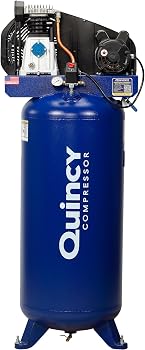
Quincy Q13160VQ 60-Gallon Single-Stage Air Compressor
Quincy's exact-model data gives this 60-gallon single-stage unit unusually clear airflow, electrical, pressure, and service context, which makes it easier to size with confidence.
- 12.8 CFM at 90 PSI
- 3.5 HP, 230V single-phase motor
- 60-gallon vertical tank
The documented 12.8 CFM at 90 PSI covers a wide range of garage and workshop tools.
A conventional 230V single-phase setup is clear, common, and well documented for this class.
Amazon identity and Quincy's current exact-model specifications agree on the core configuration.

Ingersoll Rand SS3L3 60-Gallon Continuous-Duty Air Compressor
Its published 100% continuous-duty design, exact manufacturer specifications, and serviceable cast-iron pump make it the clearest choice here for frequent steady shop demand at moderate pressure.
- 11.3 CFM at 90 PSI
- Published 100% continuous duty
- 3 HP, 230V single-phase motor
Ingersoll Rand publishes this model for 100% continuous-duty operation.
Its 11.3 CFM at 90 PSI is strong enough for many steady shop workloads.
The cast-iron oil-lubricated pump and accessible oil controls favor long-term service over minimal upkeep.

VEVOR FB3500-10A300-1P 80-Gallon Oil-Free Air Compressor
The 80-gallon receiver and published 15.5 SCFM at 90 PSI give it the largest air reserve and highest airflow in the oil-free group, without adding routine pump-oil changes.
- 80-gallon vertical tank
- 15.5 SCFM at 90 PSI
- Oil-free 220V/60Hz single-phase configuration
The listing publishes 15.5 SCFM at 90 PSI, the highest figure in the shortlist.
An 80-gallon receiver reduces cycling and supports longer tool runs when airflow demand is matched correctly.
The oil-free pump avoids routine oil changes, though tank draining and electrical maintenance still apply.

DEWALT DXCM601.COM 60-Gallon 155 PSI Air Compressor
This 60-gallon DEWALT balances 11.5 SCFM at 90 PSI, a 155 PSI ceiling, and a conventional 230V oil-lubricated layout without pushing into the size or electrical burden of the 80-gallon pick.
- 11.5 SCFM at 90 PSI
- 155 PSI maximum pressure
- 3.7 HP, 230V oil-lubricated design
The published 11.5 SCFM at 90 PSI is a solid middle ground for mixed shop tools.
A 155 PSI maximum provides more stored pressure than the 135 PSI single-stage models.
The 60-gallon vertical format and 230V single-phase setup suit many permanent garage installations.

California Air Tools 60040CAD 60-Gallon Oil-Free Air Compressor
Its documented 75 dBA rating, oil-free twin motors, and automatic drain target shops where noise and routine maintenance matter more than maximum pressure.
- 75 dBA published noise level
- 10.6 CFM at 90 PSI
- Oil-free twin motors with automatic tank drain
The manufacturer publishes a 75 dBA operating level, well below the other finalists with stated noise figures.
Oil-free pumps and a factory automatic drain reduce routine service steps.
The 125 PSI maximum is the lowest in this group and limits stored pressure compared with two-stage picks.

Campbell Hausfeld XC602100 60-Gallon Two-Stage Air Compressor
The two-stage pump and 175 PSI maximum provide high-pressure capability at a lower observed price than the other two-stage finalist, though 7.6 SCFM at 90 PSI limits sustained airflow.
- Two-stage oil-lubricated pump
- 175 PSI maximum pressure
- 7.6 SCFM at 90 PSI
A two-stage pump and 175 PSI ceiling provide strong stored-pressure headroom.
The published 7.6 SCFM at 90 PSI is the lowest finalist airflow and requires careful tool matching.
It brings two-stage pressure capability into a lower observed price band, with a clear airflow tradeoff.
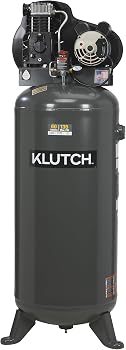
Klutch 5903356 60-Gallon Single-Stage Air Compressor
It offers a current 60-gallon, 230V entry point with 9.3 CFM at 90 PSI and straightforward oil-lubricated construction, but the published 50% duty cycle rules out continuous-heavy use.
- 9.3 CFM at 90 PSI
- Published 50% duty cycle
- 3.7 HP, 230V single-phase motor
It had the lowest observed Amazon price among the eight finalists during the current check.
The 9.3 CFM at 90 PSI output suits moderate tools when runtime stays within the duty-cycle limit.
The published 50% duty cycle is the clearest restriction in this shortlist.
Stationary air compressor specifications compared
| Product | Best for | Tank | Stage and lubrication | Published airflow | Max pressure | Power supply |
|---|---|---|---|---|---|---|
| BILT HARD 60-Gallon | Overall shop capability | 60 gal vertical | Two-stage, oil-lubricated | 15 CFM at 90 PSI | 175 PSI | 5 HP, single phase |
| Quincy Q13160VQ | Well-documented single-stage setup | 60 gal vertical | Single-stage, oil-lubricated | 12.8 CFM at 90 PSI | 135 PSI | 3.5 HP, 230V, 1-phase |
| Ingersoll Rand SS3L3 | Continuous-duty use | 60 gal vertical | Single-stage, oil-lubricated | 11.3 CFM at 90 PSI | 135 PSI | 3 HP, 230V, 1-phase |
| VEVOR FB3500-10A300-1P | High-capacity oil-free use | 80 gal vertical | Oil-free compression system | 15.5 SCFM at 90 PSI | 145 PSI | 6.5 HP, 220V/60Hz, 1-phase |
| DEWALT DXCM601.COM | Balanced garage and workshop use | 60 gal vertical | Single-stage, oil-lubricated | 11.5 SCFM at 90 PSI | 155 PSI | 3.7 HP, 230V |
| California Air Tools 60040CAD | Quieter oil-free operation | 60 gal vertical | Oil-free dual piston | 10.6 CFM at 90 PSI | 125 PSI | 4 HP, 220V/60Hz, 1-phase |
| Campbell Hausfeld XC602100 | Pressure-first tool use | 60 gal vertical | Two-stage, oil-lubricated | 7.6 SCFM at 90 PSI | 175 PSI | 3.7 HP, 230V |
| Klutch 5903356 | Lighter shop cycles | 60 gal vertical | Single-stage, oil-lubricated | 9.3 CFM at 90 PSI | 135 PSI | 3.7 HP, 230V, 1-phase |
Which stationary air compressor fits your shop?
1. BILT HARD 60-Gallon: Best overall
The BILT HARD leads this group on the combination most heavy shop users care about: 15 CFM at 90 PSI, two-stage compression, a 175 PSI ceiling, and a published 100% duty cycle. Those numbers give it the best documented fit here for impact tools, grinders, sanders, and spray equipment that need steady airflow rather than a short burst from the tank.
The tradeoff is ownership work. Its cast-iron pump is oil-lubricated, so oil checks, scheduled changes, condensate draining, belt inspection, and proper ventilation belong in the maintenance plan. The current exact-model record is also newer and less extensive than the documentation available for Quincy or Ingersoll Rand. It ranks first for capability on paper, not because BTG measured its output or durability.
2. Quincy Q13160VQ: Best documented single-stage
The Quincy Q13160VQ specification page lists 12.8 CFM at 90 PSI, a 3.5 HP motor, 230V single-phase power, and a 60-gallon vertical receiver. That is enough airflow for a broad mix of garage tools, and the exact-model documentation makes the electrical and performance limits easier to check before purchase.
This is still a single-stage compressor with a 135 PSI maximum. A two-stage design offers more pressure reserve for tools or processes that need it. Quincy uses a serviceable oil-lubricated pump, which favors conventional maintenance and repair over the low-upkeep appeal of an oil-free design. It is the strongest choice here for buyers who value clear manufacturer data and balanced airflow more than maximum pressure.
3. Ingersoll Rand SS3L3: Best for continuous-duty use
Ingersoll Rand publishes the SS3L3 for 100% continuous-duty operation. Its current model table lists 11.3 CFM at 90 PSI, 135 PSI maximum pressure, a 3 HP motor, 230V single-phase power, and a 60-gallon vertical tank. That makes it a sensible fit for frequent work at moderate pressure when a documented duty rating matters.
The 135 PSI ceiling is lower than the DEWALT and both two-stage finalists. The SS3L3 also uses an oil-lubricated cast-iron pump, so it needs the same basic service discipline as the other lubricated models. Its third-place position reflects a narrower pressure range, not weak construction or unclear evidence.
4. VEVOR FB3500-10A300-1P: Best high-capacity oil-free
The VEVOR has the largest receiver in this comparison at 80 gallons, and its exact Amazon listing states 15.5 SCFM at 90 PSI, 145 PSI maximum pressure, a 6.5 HP oil-free motor, and 220V/60Hz single-phase power. It offers more stored air than the 60-gallon models and avoids routine pump-oil changes.
Buy the electrical configuration by exact ASIN and model, not by a similar product photo. VEVOR also sells a closely related 80-gallon compressor described as three-phase. This pick is the single-phase FB3500-10A300-1P listing, ASIN B0DK53PJTH. Its 86 dB published sound level is not quiet in the ordinary sense, and the large motor makes circuit planning especially important.
5. DEWALT DXCM601.COM: Best balanced shop workhorse
The DEWALT sits between the 135 PSI single-stage models and the 175 PSI two-stage machines. Its exact listing and matched model record state 11.5 SCFM at 90 PSI, 155 PSI maximum pressure, a 3.7 HP motor, 230V power, and a 60-gallon vertical tank. That is a useful middle ground for a garage that runs several kinds of pneumatic tools but does not need the biggest receiver in the group.
It is oil-lubricated, belt-driven, and intended for permanent installation. Those traits are ordinary for this class, but they still mean checking oil, draining moisture, keeping the belt area guarded, and leaving service clearance. The 155 PSI ceiling adds storage pressure without changing the need to compare each tool’s sustained SCFM demand with the compressor’s output.
6. California Air Tools 60040CAD: Best quiet oil-free
The California Air Tools 60040CAD has the clearest noise advantage in the group. The manufacturer publishes 75 dBA, 10.6 CFM at 90 PSI, a 125 PSI maximum, 220V single-phase power, oil-free twin motors, and a factory automatic drain on the 60-gallon ASME tank.
That combination suits a shop where noise and routine maintenance matter more than maximum pressure. The 125 PSI ceiling is the lowest here, and the current Amazon page presents buying options rather than a simple direct offer. The automatic drain still needs inspection, and oil-free does not mean maintenance-free. Filters, condensate handling, fasteners, electrical connections, and ventilation remain part of ownership.
7. Campbell Hausfeld XC602100: Best pressure-first pick
The Campbell Hausfeld uses a two-stage oil-lubricated pump and reaches 175 PSI, matching the highest pressure in this comparison. Its exact listing states 7.6 SCFM at 90 PSI and 6.9 SCFM at 175 PSI from a 3.7 HP, 230V motor. That makes it a pressure-first choice for intermittent jobs that need a higher ceiling.
Airflow is the catch. At 7.6 SCFM at 90 PSI, it has the lowest published 90 PSI output among the finalists. A 60-gallon tank can supply a short burst, but it cannot make up for a compressor that recovers more slowly than a tool consumes air during a long run. Check the tool’s SCFM requirement and expected duty before choosing this model for grinding, sanding, or sustained spraying.
8. Klutch 5903356: Best for lighter shop cycles
The Klutch 5903356 record lists 9.3 CFM at 90 PSI, 135 PSI maximum pressure, a 3.7 HP motor, 230V single-phase power, and a 60-gallon vertical tank. It is a straightforward oil-lubricated single-stage compressor for moderate garage work.
Its published 50% duty cycle is the deciding limit. In practical terms, the pump needs substantial rest time within its rated cycle instead of running continuously. That can work for inflation, nailers, intermittent impact use, and other stop-and-start jobs. It is a poor fit for an air-hungry tool that keeps the pump running without enough recovery time.
How to choose a stationary air compressor
Start with airflow at the tool’s working pressure
Tank size is easy to compare, but SCFM is the better starting point for sustained tool use. Find the tool manufacturer’s air requirement at its working pressure, then compare that demand with the compressor’s published output at the same pressure. Leave operating margin for hose losses, fittings, filters, regulators, and future tools. If more than one tool may run at once, account for the combined demand.
A large tank stores more compressed air and can extend a short run before pressure falls. It does not increase the pump’s recovery rate. When tool demand stays above compressor output, tank pressure will continue to drop until the job pauses.
Choose pressure for the actual work
Maximum PSI describes the upper tank pressure, not the airflow delivered to every tool. Many common pneumatic tools are rated around 90 PSI, which is why the comparison centers on airflow at that pressure. A 175 PSI two-stage compressor can store more pressure and support higher-pressure applications, but the regulator must still be set for the connected equipment.
Two-stage compression is useful when higher pressure or a heavier workload justifies it. A well-sized single-stage unit can be the simpler choice for moderate shop use. The right answer depends on the tool requirement, operating time, and electrical installation rather than the stage count alone.
Confirm voltage, phase, and circuit requirements
Every finalist requires more installation planning than a plug-in portable compressor. Most use 220V, 230V, or 240V single-phase power, but the exact voltage, amperage, disconnect, conductor size, breaker, and starter requirements come from the model manual and nameplate. Do not assume two similar-looking compressors share the same phase or wiring.
Have a qualified person verify the branch circuit and local requirements before delivery. Check whether the unit arrives with a cord, plug, pressure switch, starter, or bare leads, and leave safe service access around the motor, pump, drain, and belt guard.
Match the duty cycle to run time
Duty cycle tells you how much of a defined period the pump may run under stated conditions. The Ingersoll Rand and BILT HARD publish continuous-duty capability, while Klutch publishes 50%. Where a maker does not publish a percentage, do not invent one from horsepower, tank size, or the word “heavy-duty.” Use the manual’s operating limits and temperature guidance.
Decide between oil-lubricated and oil-free
Oil-lubricated pumps need oil checks and scheduled changes, but they are conventional, serviceable designs in this class. Oil-free pumps remove that routine oil service and can reduce the risk of oil carryover from the pump. They still need intake-filter care, tank draining, leak checks, clean cooling airflow, and inspection of electrical and mechanical parts.
If air quality matters for finishing or another sensitive process, plan the downstream filtration, drying, and piping as a system. An oil-free pump does not remove moisture from compressed air.
Plan for noise, drainage, and floor space
Vertical tanks save floor area, but the full installation needs room for cooling, maintenance, piping, vibration isolation, and access to the drain. Measure ceiling height and door clearance before the compressor arrives. Check the delivery path as well as the final footprint because these machines are heavy and top-loaded.
Condensate collects in every receiver. A manual drain requires a schedule and safe access. An automatic drain reduces the daily task but still needs testing and maintenance. Follow local rules for condensate disposal, especially when lubricants or treatment chemicals may be present.
Installation and safety checks
Read the exact manual before moving or wiring the compressor. Anchor and level the tank as directed, use pressure-rated piping and fittings, protect the belt and other moving parts, and keep combustible material away from hot surfaces. Never drill, weld, or modify an air receiver. Never alter the pressure switch or safety valve to raise the working pressure.
Release stored pressure and isolate electrical power before service. A stationary compressor can restart automatically after pressure drops, even when nobody is standing at the controls. Inspect the receiver, drain condensate, and test the safety valve only as the manual directs. Ordinary shop compressors are not approved breathing-air systems.
The Campbell Hausfeld XC602100 manual and the manuals linked from the Ingersoll Rand product page show the kind of installation, pressure, lubrication, and lockout instructions that must be checked for the exact unit. Model-specific directions control over general advice.
How we evaluated the picks
We screened 20 current Amazon US listings above $50 and retained eight complete stationary compressors from eight brands. Portable tanks, pumps, motors, accessories, unclear-brand listings, and duplicate configurations were excluded. Each finalist was matched by country, ASIN, model, tank, power configuration, and included equipment.
The editorial score weights air delivery 25%, pressure and stage 20%, duty cycle 15%, power fit 10%, maintenance 10%, value fit 10%, and evidence confidence 10%. Price informed the internal value score during the current check but is not published in the comparison table because it can change. Amazon ratings, review counts, coupons, and bought-text do not affect the evergreen ranking.
BTG did not measure airflow, pressure, noise, fill time, current draw, heat, durability, or tool runtime. Manufacturer and listing claims are not a substitute for the nameplate, manual, local electrical review, or a tool-demand calculation for the actual shop.
Frequently asked questions
Is a 60-gallon air compressor enough for a home garage?
It can be, but tank size does not answer the question by itself. Compare the compressor’s SCFM at the tool’s working pressure with the tool’s sustained demand and expected run time. Intermittent impact use may be manageable on a lower-output unit, while continuous sanding, grinding, or spraying can require much more recovery capacity.
Is a two-stage compressor always better?
No. Two-stage compression makes sense when higher pressure or heavier use supports the added cost and maintenance. A single-stage compressor with enough airflow can be the better fit for moderate work at common tool pressures. Stage count, SCFM, maximum PSI, duty cycle, power requirements, and service access should be considered together.
Can I run a 230V stationary compressor from a dryer outlet?
Do not assume the outlet, circuit, receptacle, conductor size, breaker, or duty is suitable. The compressor must be installed according to its nameplate, manual, and local electrical requirements. A qualified electrician should verify the dedicated circuit and disconnect arrangement for the exact model.
Does an oil-free compressor provide dry air?
No. Oil-free describes pump lubrication, not moisture removal. Compressing air still creates condensate. A process that needs dry or especially clean air may require an aftercooler, separator, filters, dryer, suitable piping, and regular drain maintenance.
How often should a stationary air-compressor tank be drained?
Follow the exact manual and account for humidity, run time, tank design, and drain type. Some shops need frequent manual draining, while an automatic drain follows its own test and service schedule. Do not wait for water to become obvious at the outlet before maintaining the receiver.
Final verdict
The BILT HARD 60-Gallon 5 HP Two-Stage Stationary Air Compressor ranks first for its published 15 CFM at 90 PSI, 175 PSI maximum, two-stage pump, and continuous-duty claim. The Quincy Q13160VQ is the stronger choice when exact manufacturer documentation and balanced single-stage performance matter most. The Ingersoll Rand SS3L3 is the clearest continuous-duty single-stage option.
Choose the VEVOR when an 80-gallon oil-free, single-phase configuration fits the installation, or the California Air Tools 60040CAD when lower published noise and easier routine maintenance matter more than maximum pressure. The DEWALT is a balanced 60-gallon workhorse, the Campbell Hausfeld favors pressure over airflow, and the Klutch belongs in lighter duty cycles.